


First in Decade: Historic Xi Jinping US Visit Set for September 2026
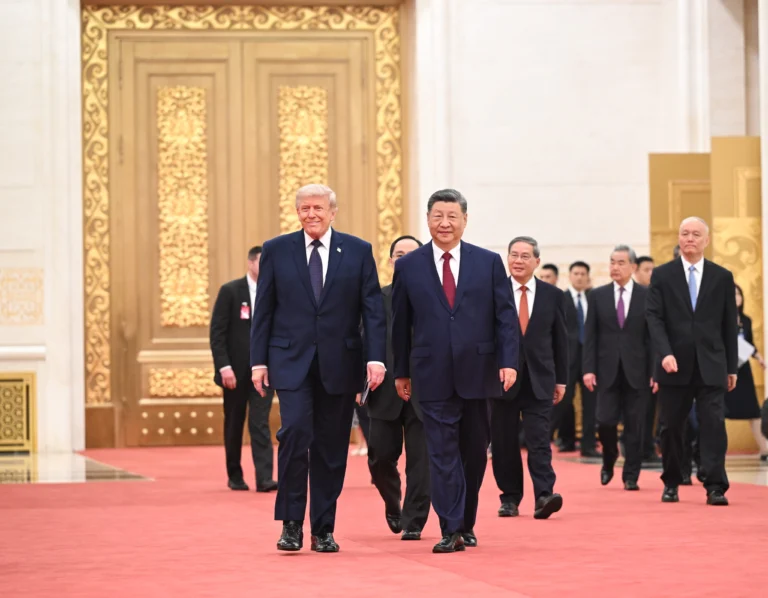
The upcoming Xi Jinping US visit marks the first Chinese state visit to Washington in over a decade.
May 16, 2026 Hour: 12:45 pm
🔗 Comparte este artículo
Chinese President Xi Jinping will make a state visit to the United States on September 24, 2026, at the invitation of President Donald Trump. Both sides aim for substantial outcomes in this crucial bilateral relationship.
Related: 25th Anniversary: Strategic Putin China Visit Strengthens Global Partnership
Xi Jinping US Visit Confirmed for September 2026
Beijing, May 16, 2026 — Chinese Foreign Minister Wang Yi announced that President Xi Jinping will make a state visit to the United States on September 24, 2026, accepting an invitation from President Donald Trump. The Xi Jinping US visit aims to strengthen one of the world’s most important and complex bilateral relationships.
Both sides will work together to prepare the meeting and create conditions for substantial results. Chinese officials describe the diplomacy between the two heads of state as the “guiding star” of China-US relations.
The visit will be the first formal state visit by a Chinese leader to the United States in more than ten years, since Xi’s 2015 trip during the Obama administration. It comes after Trump’s recent visit to China.
The Xi Jinping US visit includes First Lady Peng Liyuan and will feature high-level talks at the White House.
Strategic Agenda and Mutual Cooperation
During their previous conversation, Presidents Xi and Trump agreed to maintain close contact through meetings, phone calls, and correspondence. They also pledged mutual support in organizing major multilateral events.
These include the informal APEC Leaders’ Meeting in Shenzhen, China (November 18-19) and the G20 Summit in Miami, United States (December 14-15).
Trump expressed gratitude for Xi’s hospitality during his recent trip to China and described the visit as highly successful. He referred to Xi as an “old friend” and emphasized the importance of improving bilateral ties for both countries and the world.
The leaders exchanged views on key regional issues during their talks, setting the stage for more comprehensive discussions in September.
Official Chinese Foreign Ministry readout: fmprc.gov.cn.
Xi Jinping US Visit Opens New Chapter in Bilateral Relations
The Xi Jinping US visit represents a significant diplomatic opportunity for both nations to address differences while expanding areas of cooperation. Trade, technology, climate change, and regional security are expected to feature prominently on the agenda.
Chinese officials stress the need for mutual respect and win-win outcomes. The meeting comes at a time when global attention remains focused on managing competition between the world’s two largest economies.
Analysis from the Brookings Institution on US-China relations: brookings.edu.
Geopolitical Context and Broader Regional Implications
The planned Xi Jinping US visit occurs amid a complex global landscape marked by shifting power dynamics and multiple regional tensions. As both countries navigate differences over trade, technology, and security issues in the Indo-Pacific, this high-level engagement signals a willingness to manage competition through dialogue rather than confrontation.
For the Asia-Pacific region, the visit carries particular weight. It could influence stability on the Korean Peninsula, cross-strait relations, and South China Sea dynamics. In Latin America, Africa, and the Middle East, many nations view the relationship between Washington and Beijing as a determining factor in global economic governance and development financing.
The meeting also holds significance for multilateralism. Coordination on APEC and G20 reflects shared interest in preventing fragmentation of global institutions. Success in achieving “substantial results” could help stabilize international markets and reduce uncertainty for third countries caught between competing powers.
This visit underscores China’s commitment to constructive engagement with the United States while reinforcing its independent foreign policy. It may set the tone for bilateral relations through the remainder of 2026 and beyond, with potential ripple effects on global supply chains, climate cooperation, and efforts to address transnational challenges.
Author: JMVR
Source: Agencias